Last updated: 5 November 2026
By Swapnil Patil, remote WordPress developer
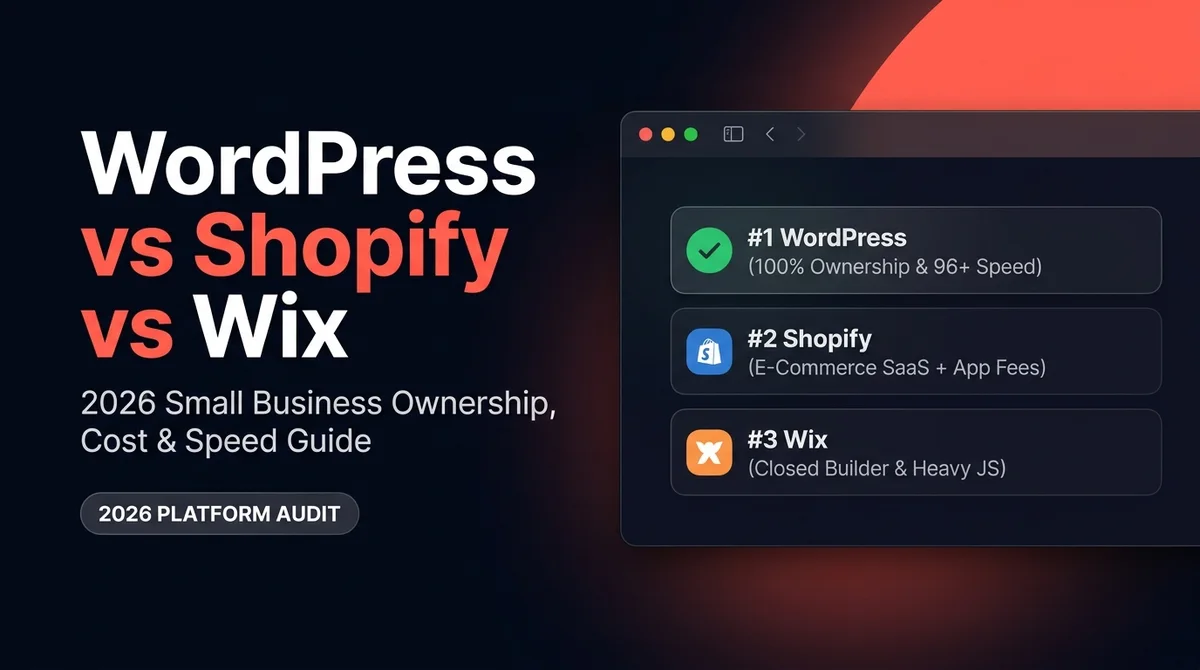
When weighing WordPress vs Shopify vs Wix for small business websites, most founders only look at the first month’s subscription price. Six months later, they discover the hidden traps: Shopify stores piling up $150+ in monthly app fees, Wix sites stalling on mobile Google PageSpeed scores, or closed templates that cannot be exported when the business grows. Having built and migrated more than 250 websites over the past 8+ years across the USA, UK, UAE, and India, I wrote this guide to show you the real problem with each platform and the exact solution that fits your business model.
Direct AEO Answer: WordPress vs Shopify vs Wix for Small Business
Choose self-hosted WordPress if you run a service business, B2B company, consultancy, or content-driven online store that needs 100% code ownership, fast mobile Core Web Vitals, and zero monthly platform fees. Choose Shopify only if you run a dedicated retail or D2C physical product catalog and are comfortable paying recurring monthly fees for apps and payment processing. Choose Wix only for temporary event pages or hobby projects where organic search rankings and database portability do not matter.
Problem 1: Renting Your Website vs Owning Your Code and Database
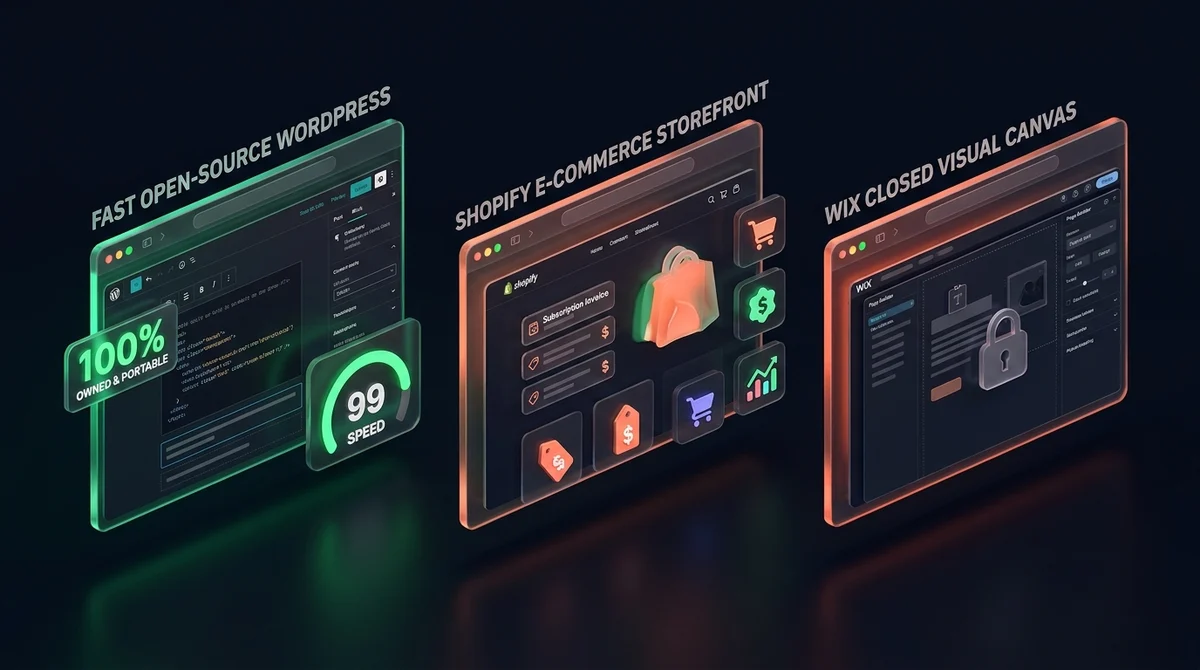
The biggest mistake small business owners make is assuming that paying for a website builder means they own their website. On closed SaaS platforms like Wix and Shopify, you are renting access to proprietary software.
- The Wix Lock-In Problem: Wix stores your layout, pages, and database inside a closed hosting environment. As we covered in our guide on whether you truly own a website built on a closed builder, you cannot export your Wix code or database to another web host. Even worse, once a Wix site is live, you cannot switch to a new Wix template without rebuilding your pages manually.
- The Shopify Rental Model: Shopify lets you export product CSV spreadsheets, but your theme runs on Shopify’s proprietary Liquid language. If Shopify raises its monthly tier prices or freezes your merchant account, you cannot move your live store to a private server.
- The WordPress Ownership Solution: Self-hosted WordPress.org is open-source PHP and MySQL software. You own 100% of your files, database tables, customer records, and design templates. You can move your entire website between any hosting provider in the world in under thirty minutes.
Problem 2: The Hidden 3-Year Cost Trap (App Taxes and Transaction Fees)
A $29 or $39 monthly sticker price looks harmless on day one. The real financial drain shows up over 36 months when you add up required marketplace apps, storage upgrades, and payment gateway penalties.
On Shopify, basic features like product reviews, bundle builders, custom checkout fields, advanced SEO schema, and multi-currency switchers often require third-party apps that charge $15 to $49 every single month. If you operate in a country where Shopify Payments is unavailable (or prefer your own merchant gateway), Shopify also charges an extra 0.6% to 2.0% transaction fee on every sale.
With self-hosted WordPress, the core software and WooCommerce plugin cost $0 per month. As detailed in our small business WordPress website cost breakdown, a custom one-time build starts at $200 for a high-converting landing page or $500 for a complete multi-page business website, with zero recurring platform commissions.
| Comparison Factor | Self-Hosted WordPress | Shopify (SaaS) | Wix Business |
|---|---|---|---|
| Monthly Platform License | $0 / month (Open-Source) | $39 – $399 / month | $29 – $159 / month |
| Typical Monthly App / Add-On Cost | $0 – $15 / month | $80 – $250 / month | $25 – $90 / month |
| Extra Platform Transaction Fee | 0% (Direct Stripe / PayPal) | 0.6% – 2.0% (External gateways) | 0% (Standard card rates apply) |
| 3-Year Software & Hosting Total | $540 – $1,080 | $4,280 – $9,500+ | $1,940 – $5,700+ |
| Code & Database Portability | 100% Portable (PHP / MySQL) | Locked Liquid Theme (CSV export) | 0% Exportable (Locked Host) |
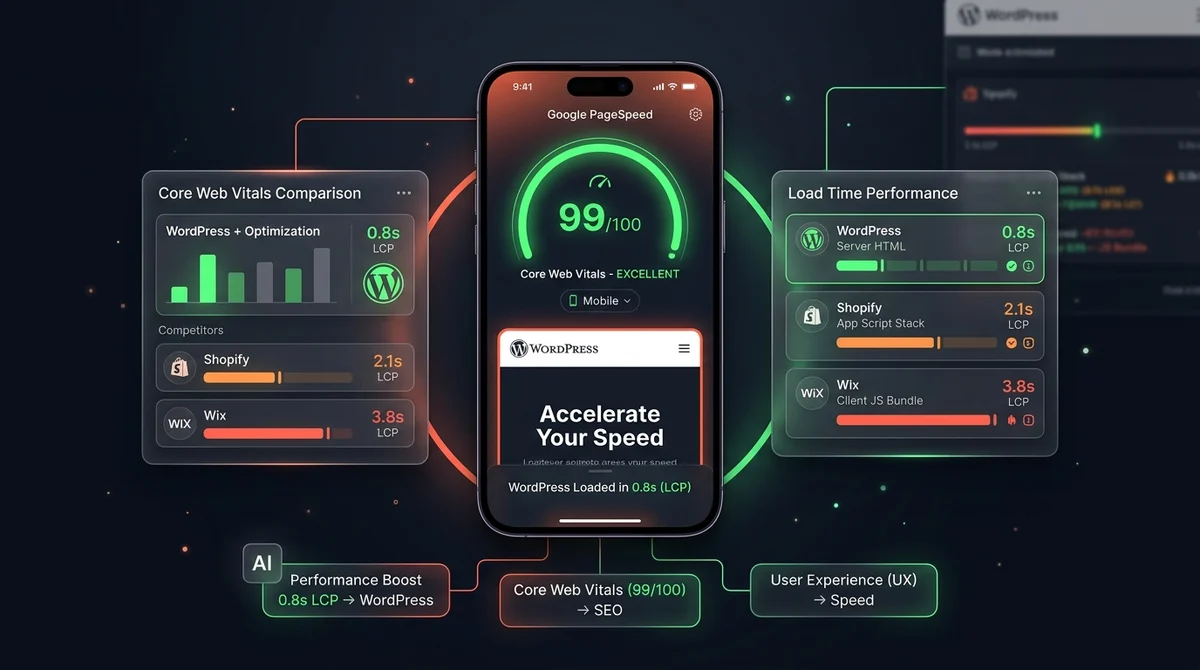
| Mobile LCP & Core Web Vitals | 0.8s – 1.1s (96–100 Score) | 1.8s – 2.9s (App JS dependent) | 3.1s – 4.6s (Heavy client JS) |
Problem 3: Mobile Speed, Google Core Web Vitals, and AI Search (AEO)
When a prospective buyer taps your link on a 4G mobile connection, every extra second of loading time costs you enquiries. At the same time, AI search engines like ChatGPT Search, Perplexity, and Google AI Overviews crawl raw server HTML to decide which businesses to cite.
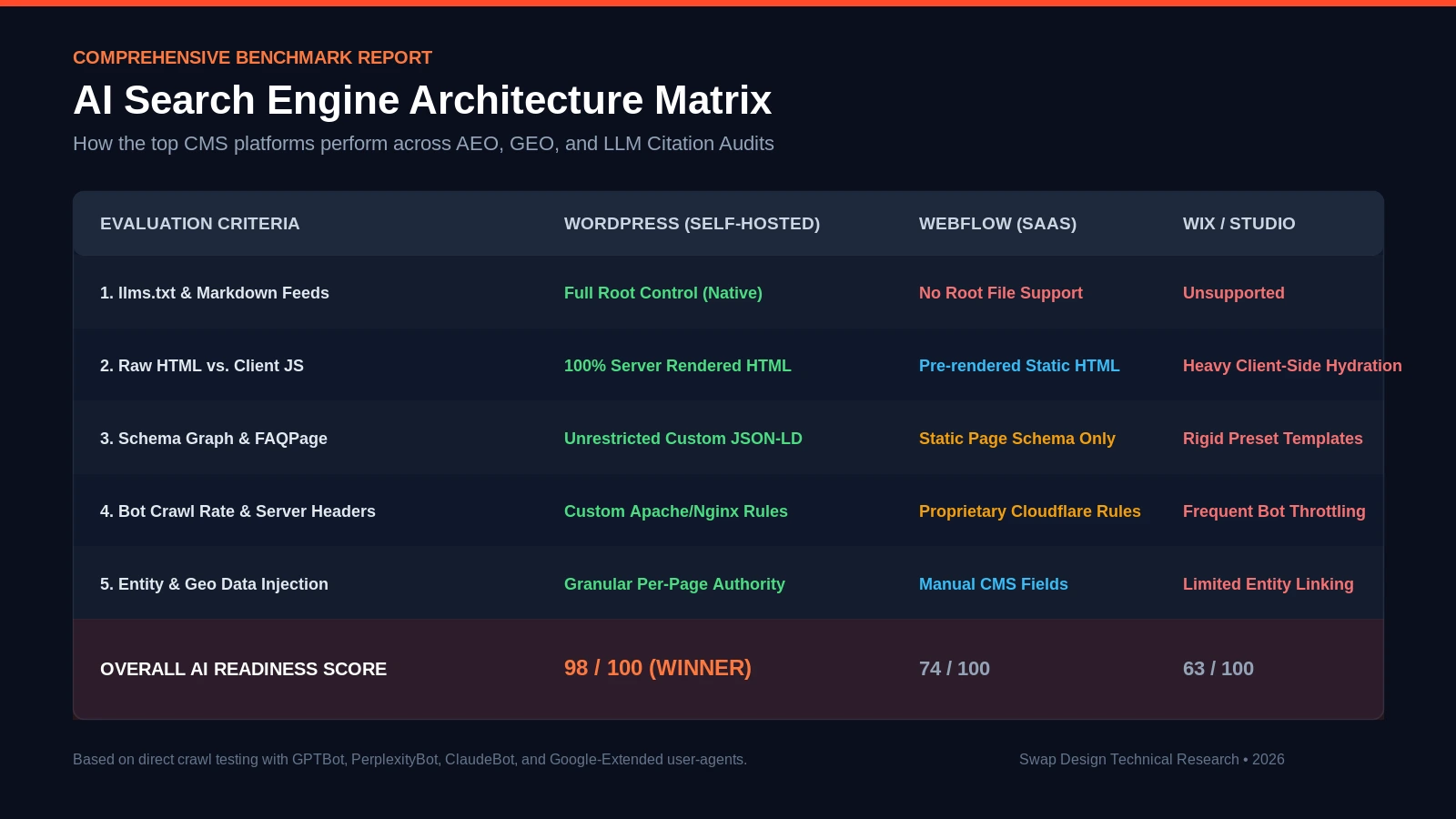
Wix relies heavily on client-side JavaScript bundles and deeply nested <div> containers. When a phone or an AI crawler requests a Wix page, it often waits over 3 seconds for scripts to hydrate before the main text renders, causing sites to fail Google Core Web Vitals.
Shopify has a fast server CDN, but every third-party app you install injects extra JavaScript files into your storefront header. In addition, Shopify forces rigid URL folders (such as /collections/, /products/, and /pages/) and does not allow you to upload root-level /llms.txt files without setting up external reverse proxies.
A clean WordPress site built with native Gutenberg blocks outputs lightweight, server-rendered HTML in under 300 milliseconds. You can read our Elementor vs Gutenberg speed benchmark and our best CMS for AI search (AEO) breakdown to see how clean HTML and full Schema.org JSON-LD control help WordPress rank faster.
When Does Shopify Actually Make Sense? (Real Client Case Studies)
I never push a single tool when another platform fits the job better. While WordPress wins for 90% of service businesses, B2B companies, and custom stores, Shopify is a strong choice when a direct-to-consumer (D2C) retail brand scales into high-volume daily shipping and wants a managed retail checkout.
For example, on both the IMC Unani herbal healthcare store and the Dr. Aqsa’s D2C skincare brand, we built Phase 1 on WooCommerce to validate the product catalog and establish organic search rankings with low overhead, then executed a structured Phase 2 migration to Shopify once order volume scaled. By contrast, for B2B pipeline and industrial companies like IntentFlow Media and ATR Drill Dubai, custom WordPress architecture delivered the exact SEO authority and lead routing they needed without monthly SaaS bloat.
How to Migrate or Build Without Losing Search Rankings
If your business is currently stuck on a slow Wix site or an overpriced Shopify setup, moving to WordPress does not mean losing your Google traffic. By auditing your top-performing pages first (see our website redesign checklist on what to keep) and mapping strict 301 redirects using our Wix to WordPress redirect checklist, we preserve every ranking URL while cutting your monthly software bills.
| Your Business Type & Goal | Recommended Platform | Why It Fits Best | Swap Design Build Price |
|---|---|---|---|
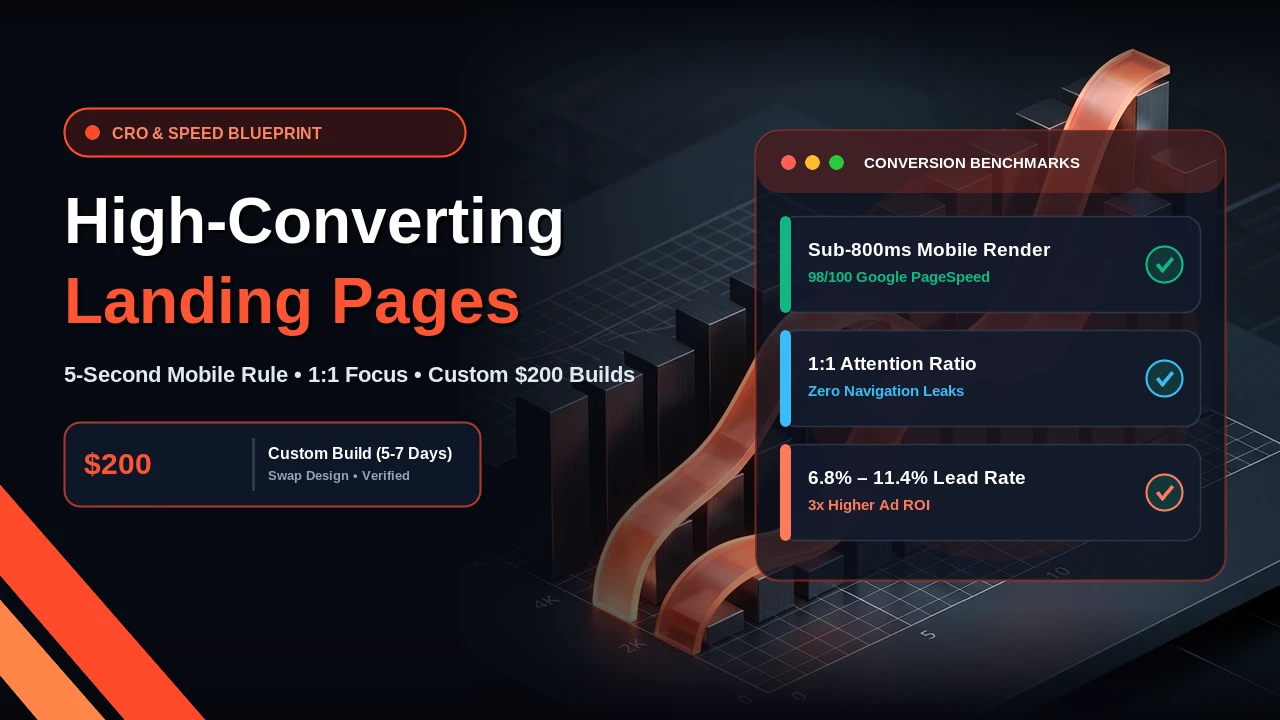
| Paid Ad Campaign / Lead Funnel | WordPress Gutenberg | Sub-1.1s mobile load time protects ad click ROI; zero monthly platform tax | $200 (5–7 business days) |
| Service Business, Consultant, or B2B Firm | Self-Hosted WordPress | Full SEO/AEO control, custom URL slugs, JSON-LD schema, 100% ownership | From $500 (2–3 weeks) |
| Content-First Store or B2B Catalog | WordPress + WooCommerce | Custom quote/RFQ flows, 0% extra gateway fees, full database control | $850 – $2,400 (3–5 weeks) |
| High-Volume D2C Retail Apparel / Cosmetics | Shopify (Custom Liquid) | Hosted checkout with minimal app bloat using custom-coded Liquid sections | Custom Quote (Milestone split) |
Ready to Build a Fast Website You Actually Own?
Whether you need a brand-new custom WordPress website from $500, a focused landing page from $200, or an ongoing WordPress maintenance plan from $120/month, you work directly with me (Swapnil Patil). All projects are billed in USD ($) via Wire Transfer or PayPal on a transparent 50/50 milestone schedule. Send me your project details here and I will reply with an honest platform recommendation and fixed quote.